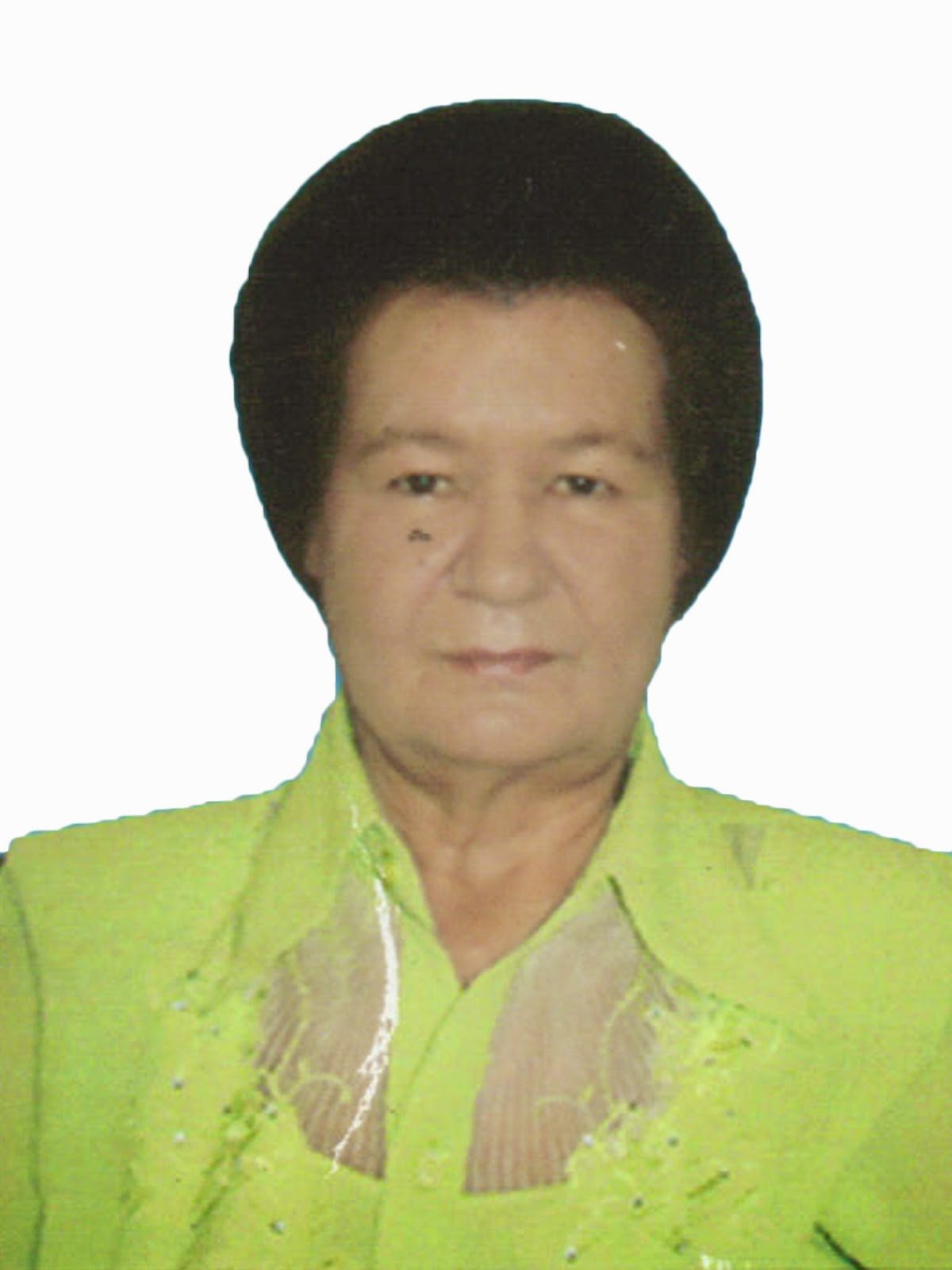
1.5.15

Kyrgyzstan: the defendants declared wanted

Based on the materials of the criminal case № 141-10-240.

The trial of those accused of "organising mass disorder" in June 2010 is still going on after five years.

On 28 April 2015, the Osh City Criminal Court adjourned the hearing. This happened because the
four defendants again did not show up in the Court and were declared wanted. Daniyar Kadirov was placed under a house arrest.
  • The defendants accused of «organising riots» in June 2010:
Dilmurat Abdurasulovich Khaydarov, an ethnic Uzbek, born on 8 June 1973 in the village of Nariman of the Karasu district of the Osh region of the Kirghiz SSR. He is married and has four children. He has no previous convictions. He is a lawyer. From 27 June 2010 to 4 April 2014 he was imprisoned on charges of "organising mass disorder". He was released under an amnesty. He is under an international protection in accordance with the UN Convention on Refugees.

Daniyor Nematovich Kadirov, an ethnic Uzbek, born on 17 November 1970 in the village of Kashgar of the Karasu district of the Osh region of the Kirghiz SSR. He is married and has three children. He has no previous convictions, is unemployed.

Shukurillo Saidazizovich Kochkorov, an ethnic Uzbek, born on 28 January 1979 in the village of Madi of the Karasu district of Osh region of the Kirghiz SSR. He is married and has one child. He has no previous convictions. He is a carpenter. While in detention, he fell ill with tubercular meningitis. Of the defendants, only Daniyar Kadirov was present at the hearing, five others were missing.

Bahadir Zhorabaevich Sabirov, an ethnic Uzbek, born on 20 December 1976 in the village of Nariman of the Karasu district of the Osh region of the Kirghiz SSR. He is married and has three children. He has no previous convictions, is a welder.

Ghani Ergashovich Sadikzhanov, an ethnic Uzbek, born on 22 June 1974, in the village of Nariman of the Karasu district of the Osh region of the Kirghiz SSR. He is married and has five children. He has no previous convictions, is a tractor driver.

Khairullo Akhmatovich Saipov, an ethnic Uzbek, born on 26 June 1976 in the village of Nariman of the Karasu district of the Osh region of the Kirghiz SSR. He is married and has two children. He has no previous convictions, is a welder. He suffers from liver cirrhosis.

*   *   *
On 29 January 2015, at 7 o'clock PM, in the village of Nariman, where a former Kyrgyz political prisoner Dilmurat Khaydarov is registered, the search began, it lasted for five hours.

About 90 masked and armed Special Forces operatives ensured security of working operatives. During the whole operation, all the surrounding streets were blocked. The traffic was paralysed for a few hours. Residents of the Mumin Polvan Street could not access their homes, no explanation was given. Even the members of the local-governing body ensuring order did not get any clarification about the situation.

In the summer of 2014, Dilmurat Khaydarov and his family left Kyrgyzstan, and his sister looks after his house. She was taken from her place of work by an agent of the State Service for National Security (ГСНБ) who presented a warrant to search the house owned by Khaydarov. They said that they have "information about his participation in jihad in Syria" and have to search for weapons in his house.

Closer to 23:00 hours, Special Forces operatives began to disperse, they apologised to Dilmurat Khaydarov’s sister for the inconvenience. The whole house was ransacked, they even used mine detectors. There were no weapons found.
According to materials of the criminal case № 141-10-240 against the citizens of Kyrgyzstan Dilmurat Khaydarov, born in 1973; Khayrullo Saipov born in 1976.; Daniyar Kadyrov, born in 1970; Gani Sadikzhanov, born in 1974; Shukrullo Kochkarov, born in 1979; Bakhodir Sobirov, born in 1976. 
Dilmurat Khaydarov was arrested on 27 June 2010 during the "a clean up operation" conducted by the military in the village of Nariman. The authorities instigated two criminal cases against him on charges of the murder of Azhimamat Seyitov, a tax inspector at the village of Nariman and killing of two soldiers. He was charged under Articles 233, Parts 1, 2, 3, (organisation of, participation in the riots, calling for / inciting to disobey the authorities); 30-97, Part 2, paragraphs 4, 5, 9, 15, (complicity in the murder); 30-174, Part 2, paragraph 2 (complicity in the destruction of property); 28-340 (attempted murder of a law enforcement officer and a soldier) of the Criminal Code of the Kyrgyz Republic.

During the investigation of the criminal case the fact of murder of Seyitov was not established, as his body was never found. But Khaydarov was charged under Article 30-97 of the Criminal Code (complicity in murder). This charge carries a prison sentence of up to life imprisonment.

The trial lasted for four years.

On 4 April 2014 Dilmurat Khaydarov was released under an amnesty, as evidenced by the certificate of release. On the basis of the appeal by the victims and the prosecutor, the case was reopened, and Dilmurat Khaydarov was declared wanted.
  • Chronology of events
     – 7 October 2010: the Karasuy District Court (the Judge P.A. Baysunov) handed down its Decision on the criminal case of Saipov’s murder redirecting the case for additional investigation;

     – 2 November 2010: the Osh Regional Court upheld the Decision of the Karasuy District Court;

     – having considered the complaint by the victims to the Supervisory Court regarding annulment of the decisions by the Karasuy and Osh Courts, the Supreme Court upheld the decisions of the Court of First and the Second Instances;

     – 11 February 2011: the Karasuy District Court (the Judge M. Dzhalalova) handed down its Decision redirecting the case for additional investigation;

     – 28 September 2011: at the Karasuy District Court, the Judge M. Dzhalalova refused to consider the criminal case, because, during the hearing, the victims attacked the defendant D. Khaydarov;

     – 4 November 2011: during the hearing at the Karasuy District Court, the defendants challenged the Judge Z. Apyshev;

     – 20 January 2011: the Karasuy Distric Court (the Judge N. Matraimov) handed down its Decision on the criminal case regarding murder of two soldiers and sentenced D. Khaydarov to 8 years of imprisonment;

     – 2 March 2011: the Osh Regional Court overruled the Decision of the Karasuy District Court dated 20 January 2011;

     – 26 May 2011: the Supreme Court upheld the Decision of the Osh Regional Court and returned the case for reconsideration;

     – 22 July 2011: the Karasuy District Court (the Judge M. Dzhalalova) decided to send the case for additional investigation;

In November 2011 the two criminal cases against D. Khaydarov were joined;

     – 22 February 2012 the Karasuy District Court (the Judge S. Zakirov) issued its Decision to resend the case for additional investigation. Following this Decision, the victims sent their apposing application asking the Osh Regional Criminal Court to continue the trial.

     – 12 April 2012: at the hearing of the Osh Regional Court (chaird by the Junge М.М. Toktamishev, and panel of the Judges И.М. Ashirbaeva, К.М.Turgumbayev) the Decision handed down by the Judge S. Zakirov was quashed, the case was returned to the Karasuy District Court. The case was heard by a different judge.

     – In the following 10 days, the lawyer representing the defendants appealed this decision to the Supreme Court of Kyrgyzstan insisting that the Decision by the Judge S. Zakirov of the Karasuy District Court has to be upheld.

     – 2 August 2012: the Supreme Court of Kyrgyzstan upheld the Sentence of the Osh Regional Criminal Court dated 12 April 2012.

      – 25 January 2013: the Osh City Court headed by the Judge B.A. Osmanov started hearing of the criminal case № 141-10-240 After few court hearings, the victims challenged the Judge and the case was transferred to the Judge R.B. Kozhomkulov who considered the case for about a year.

      – 22 January 2014: the Judge Ramazan Burkanovich Kozhankulov of the Osh City Criminal Court sentenced D. Khaydarov to 7 years of imprisonment on the basis of Article 233, Part 2 (participation in mass riots).

    – 26 March 2014: the Decision of the Osh Regional Criminal Court (chaired by the Judge A.E. Kurbanov and panel of Judges A.Dz. Abdillaev and M.M. Toktamushev) was handed down. It sentenced Dilmurat Khaydarov, in accordance with Article 233, Part 1 (organising the mass riots), to 10 years of imprisonment. Previously, he was accused of part 2 of the same Article (participation in the mass riots) (punishable with imprisonment of up to 8 years). Other defendants  in the case were sentenced as follows: Part 2 of Article 233: Sh. S. Kuchkarov, B.Zh. Sobirov, D.N. Kadyrov– to 6 year of imprisonment, Kh. A. Saipov and G.E. Sobirzhanov – to 8 years of imprisonment. The charges of under Articles 97 (murder), 340 (encroachment on the life of an officer of a law-enforcement agency), 172 и 174 against the defendants were dropped. The Court was not offered any evidence of the accusations. The only «evidence» of the guilt of the defendants was their leadership skills. According to acts of amnesty issued in 2011 and 2014 the defendants were released.

     – 4 April 2014: at the Pre-Trial Detention Centre (СИЗО) they were issued certificates of their release confirming that they served the term under the Sentence dated 26 March 2014.

     – Not long after that, the victims appealed to the Cassation Court against the Sentence of the Osh Regional Criminal Court.

     – 24 June 2014: the Supreme Court of Kyrgyzstan heared the case and returned the case to the Karasuy District Criminal Court. However, the case was heard by the Osh City Court because the victims challenged the Judges of the Karasuy District Court.

    – 25 July 2014: the Osh City Criminal Court reconsidered the Sentence handed down on 26 March 2014 and decided to reopen the trial of the criminal case.

    – 26 March 2015: the Osh City Criminal Court held had a hearing, which the prosecutor and the victims failed to attend. Of the defendants, only Daniyar Kadirov was present, five others were not.

    – 7 April 2015: the Osh City Criminal Court held the next hearing, which the prosecutor and the victims failed to attend. Of the defendants, only Daniyar Kadirov was present, five others were not.

    – 19 and 23 April 2015: the hearing at the Osh City Criminal Court were adjourned, as the prosecutor, victims of Daniyar Kadirov and other defendants did not attend.

    – 28 April 2015: the Osh City Criminal Court suspended the trial because of the absence of five out of the six defendants. Dilmurat Khaydarov, Bahadir Sabirov, Gani Sadikzhanov, Khairullo Saipov and Shukurillo Kuchkarov did not show up. The sixth defendant Daniyar Kadirov came to the hearing. During the hearing, the Court decided to place him under a house arrest. The victims did not attend the hearing either.


Our previous publications on this case:
– Press Release  «Kyrgyz citizen DilmuratKhaydarov did not go to Syria» dated 8 February 2015;
– Press Release «Kyrgyzstan: the prisoner Khayrulla Saipov needs urgent hospitalisation» dated 11 February 2013;
– Press Release «Kyrgyzstan: the case of Dilmurat Khaydarov will be reconsidered» dated 28 January 2013;
– Press Release «Dilmurat Khaydarov: «In those days of the conflict, I even thought that they will express gratitude, but it turned out to be the opposite», dated 14 June 2012;
– Press Release «Dilmurat Khaydarov: «I love Kyrgyzstan, believe in its civilised future, but no one listens to me!», dated 28 February 2012.


19.4.15

Open Letter Regarding the Human Rights Situation in Azerbaijan

‪#‎HelloBaku‬
We the undersigned are alarmed by the deteriorating human rights situation in Azerbaijan. Arrests and detentions of journalists, civil society and human rights activists, religious believers, and opposition figures have multiplied; Azerbaijan now has twice as many political prisoners as Russia and Belarus combined. The government has targeted domestic and foreign NGOs, freezing their bank accounts and effectively paralyzing them. Senior government officials have engaged in an ugly anti-Western campaign. Corruption is a huge problem and inhibits the country’s ability to flourish economically and politically. The December 26 raid on the office of Radio Free Europe/Radio Liberty, a publicly funded news organization that reaches countries in the former Soviet Union and beyond, represents a direct challenge to the principles of freedom of speech. Through these actions and statements, the government of Azerbaijan has openly rejected its international obligations as signatory to the International Covenant on Civil and Political Rights and the Open Government Partnership as well as the Extractive Industries Transparency Initiative, and as a member of the OSCE and the Council of Europe.

The time has come to impose consequences on the Azerbaijani government for its abysmal treatment of its own people. Official expressions of concern about the deteriorating human rights situation have not yielded results. Accordingly, more concrete measures including targeted sanctions against specific government officials should be adopted to reverse this trend and bring Azerbaijan back to a path toward meaningful European integration. Western governments and parliaments should:
  • Impose a visa ban and asset freeze on senior Azerbaijani government officials responsible for and involved in gross human rights abuses. In the United States, President Obama has existing authority to deny visas under an August 2011 presidential proclamation that bars entry to “persons who participate in serious human rights abuses.” We urge other democratic states to follow suit.
  • Block trade promotion assistance—e.g., in the U.S., Export-Import Bank and OPIC support—to Azerbaijani state-owned entities.
  • Convene congressional/parliamentary hearings on the declining human rights situation in Azerbaijan to shine a spotlight on the abuses. Increasing awareness about the real situation inside the country is imperative.
  • Organize a political leaders boycott of the inaugural European Olympic Games, which the Aliyev government will host in June. We also urge corporate partners of the games to withdraw their sponsorship.
Human rights organizations, governments, and international organizations have already called for the immediate and unconditional release of political prisoners, but such calls have not been heeded by the government of Azerbaijan, which persists in a targeted campaign against critics of the government. In a resolution passed September 18, 2014, the European Parliament called on Azerbaijan to release all political prisoners and noted a number of measures that could be used if Azerbaijan fails to do so, including consideration of the “possibility of targeted sanctions against those responsible for human rights violations.” The resolution also called on member states to сommunicate with the International Olympic Committee to ensure that Azerbaijan complies with the principles of the Olympic Charter ahead of the European games that are planned in Baku in June. In addition, a December 2014 report of the Venice Commission of the Council of Europe reiterated numerous prior findings and reports from the Commission and the European Court of Human Rights that Azerbaijan’s NGO legislation unduly restricts freedom of association and has a “chilling effect on civil society.” 

The Council of Europe’s human rights chief, Nils Muiznieks, slammed the Azerbaijani government last year for the “totally unacceptable” human rights situation, which, he said, “flies in the face of the human rights obligations undertaken by Azerbaijan” as a member of the Council. Last August, several UN human rights envoys said they were “appalled” by the growing number of abuses and arrests of rights activists “on the basis of trumped-up charges.” The “criminalization of rights activists must stop,” they declared. 

Human Rights Watch, in its annual report, says the Azerbaijani government "escalated repression" against its critics last year, "marking a dramatic deterioration in its already poor rights record." Freedom House, in its annual report, noted yearly “declines in political rights and civil liberties” in Azerbaijan, as the government “stepped up its jailing of human rights activists, journalists, and other perceived enemies.” 

Religious freedom in Azerbaijan is also under threat, with a marked increase in arrests and repression of civil society activists and religious communities in Azerbaijan. The Council of Europe’s Venice Commission and the Organization for Security and Cooperation in Europe (OSCE) in 2012 issued a joint legal opinion finding that Azerbaijan’s 2009 religion law failed to meet its international human rights commitments. In 2014, the European Court for Human Rights found that this law gives the Azeri authorities “an unlimited discretionary power” to define and prosecute “illegal” religious activity. Provisions of that law include: compulsory state registration with complex and intrusive requirements; no appeal for registration denials; religious activities are limited to a community’s registered address; extensive state controls on the content, production, import, export, and distribution of religious materials; and state-approved religious education to preach, teach religion or lead ceremonies. Those found in violation of this law face fines that have increased exponentially since 2010.

There are nearly 100 political prisoners in Azerbaijan. The most prominent cases include:
  • Khadija Ismayilova, an intrepid journalist and contributor to RFE/RL's Azerbaijani Service who has been detained on spurious allegations. A representative for the Organization for Security and Co-operation in Europe (OSCE) called Ms. Ismayilova’s arrest “nothing but orchestrated intimidation.”
  • Activists Leyla and Arif Yunus, accused of spying for Armenian secret services—implausible charges linked to the decades-old dispute over Nagorno-Karabakh. Ms. Yunus’s health is deteriorating rapidly, as she has been denied medical treatment for diabetes, high blood pressure and hepatitis.
  • Several leading opposition figures—including Ilgar Mammadov of the opposition movement REAL and Tofig Yakublu of Musavat—who languish in prison on unsubstantiated charges. In an October 2014 decision that should be binding on Azerbaijan, the European Court for Human Rights found Ilgar Mammadov to be a political prisoner and, citing numerous violations of the European Charter, called for his immediate release. Appeals pertaining to other political prisoners are being considered by the ECHR.
  • The trial of Rasul Jafarov began in January 2015. He is head of the Human Rights Club which took a leading role in exposing human rights abuses in Azerbaijan, particularly with his Sing for Democracy Campaign that embarrassed the government during the Eurovision song сontests. He has provided information about political prisoners, including Muslims jailed for the non-violent practice of their faith or advocacy for religious freedom. Most were sentenced for publicly protesting what is in effect a ban on headscarves in schools;13 of that  group are still imprisoned and seven were released in 2014.
  • Activists Anar Mammadli and Bashir Suleymanli of the Election Monitoring and Democracy Studies Center (EMDS) were arrested and handed multi-year prison sentences following their public criticism of fraud in the October 2013 presidential election. They were among the first human rights activists arrested in the crackdown on civil society. Suleymanli was recently pardoned but Mammadli, who was awarded the 2014 Vaclav Havel Human Rights Prize from the Parliamentary Assembly of the Council of Europe, remains in prison.
  • Intiqam Aliyev, head of the Legal Education Society and one of Azerbaijan’s most prominent human rights lawyers, was arrested on trumped-up charges last summer. If convicted, he faces up to twelve years in jail. Aliyev has submitted more than two hundred cases to the European Court of Human Rights concerning violations of fundamental freedoms of Azerbaijani citizens. In 2013, in recognition of his exceptional commitment to protecting human rights, Mr.Aliyev was awarded the People in Need Homo Homini Award.
  • Rauf Mirkadirov, a prominent independent journalist and columnist with Zerkalo newspaper, was arrested in Baku airport in April 2014, after being deported from Turkey. Mirkadirov, who had been living in Turkey, was charged with espionage on behalf of Armenia, following a trip he made to Armenia to meet with civil society activists.
  • Emin Huseynov, director of the Azerbaijani NGO Institute for Reporters’ Freedom and Safety (IRFS), has been in hiding in Azerbaijan since August 2014. He is the subject of a travel ban and faces imminent arrest due to criminal charges that stem from his lawful human rights work. Other employees of IRFS have similarly faced travel bans, as well as interrogations, asset freezes, and physical attacks. Several were forced to flee the country. IRFS was raided by the Azerbaijani government around the time Huseynov went into hiding and remains closed to this day.
In addition, family members of activists are being targeted. The case against Gunel Hasanli, daughter of National Council and former presidential candidate Jamil Hasanli and young mother of two small children, who has been sentenced to two years in jail, is a total fabrication with no basis whatsoever. She has never been active in politics but is being punished because of her father’s political activities. Lawyers defending dissidents and human rights activists are also being persecuted for fulfilling their professional responsibilities, including Khalid Bagirov, who is facing politically motivated disbarment charges. His license has been suspended, depriving him of the opportunity to represent his clients who include Leyla and Arif Yunus, Rasul Jafarov, and Ilgar Mammadov.

For years, Azerbaijan’s importance as an energy supplier and partner on security and counter-terrorism has outweighed attention to its deplorable human rights record. Western officials have tended to mute their criticism of the human rights situation in Azerbaijan, allowing other interests to dominate the agenda. The growing repression during the past year, however, has now made such an approach especially untenable. With parliamentary elections scheduled for later this year, we fear the situation will only get worse unless the West takes decisive action.

To avoid imposition of such sanctions, and consistent with its commitments as a member of the Council of Europe, the Organization for Security and Cooperation in Europe, the UN Declaration of Human Rights, and other international agreements and covenants, the government of Azerbaijan needs to undertake the following steps:
  • Release all political prisoners and those imprisoned for practicing their nonviolent religious beliefs and grant them full political rehabilitation. Those imprisoned or on trial on religion-related charges, including those who publicly protested the de facto hijab ban, should have their rights fully restored.
  • Permit unrestricted visits by the United Nations Subcommittee on Prevention of Torture.
  • Cease harassment and intimidation of family members of opposition activists, human rights defenders, and their lawyers.
  • Respect the rights of journalists to do their job unhindered.
  • End the campaign against domestic and foreign non-governmental organizations and stop the push for legislation that would restrict the activities and funding of NGOs.
  • Create the conditions for free and fair parliamentary elections later this year.
  • Permit foreign broadcasters to resume operations without fear of state harassment and raids.
We hope that Azerbaijan will succeed as a democratic state fully integrated into the international community. We hope that stronger ties will develop between Azerbaijan and countries in the West. We support efforts to resolve peacefully the Nagorno-Karabakh conflict. But none of this is possible as long as Azerbaijan continues down the authoritarian path it is currently on. 

The government of Azerbaijan cannot be both a respected member of the international community and a repressive, kleptocratic autocracy. It must choose. We urge it to choose democracy and respect for human rights, a course that is in the best interests of the people of Azerbaijan and in the cause of international peace.

Ambassador (ret.) Morton Abramowitz

Elliott Abrams
Former Assistant Secretary of State for Democracy and Human Rights

Gorkhmaz Asgarov
Azerbaijani-Americans for Democracy (AZAD)

Association for the Protection and Promoting of Animals Rights (HAGID) – Turkey

Elmar Chakhtakhtinski
Azerbaijani-Americans for Democracy (AZAD)

Eric Chenoweth
Director, Institute for Democracy in Eastern Europe

Nicholas Daniloff
Professor emeritus, Northeastern University

Christophe Deloire
Secretary General, Reporters Without Borders

Charles H. Fairbanks, Jr.

Larry Diamond
Hoover Institution and Center on Democracy, Development, and the Rule of Law,
Stanford University

Freedom to Earth Association (YOD) - Turkey

Jeffrey Gedmin
Georgetown University

Dr. Altay Goyushov
Historian

Johannes Grotzky
University of Bamberg, Germany

Jonas Gunnarsson
Head of the Swedish delegation to the parliamentary assembly of the Council of Europe

Roman Haken
Center for Community Work, Czech Republic

Brian Hook

Prof. William Inboden

Florian Irminger
Human Rights House Foundation HRHF

Ambassador (ret.) Richard Kauzlarich
Former US Ambassador to Azerbaijan, 1994-97

Katrin Kinzelbach
Global Public Policy Institute, Germany

Jakub Klepal
Forum 2000, Czech Republic

Gerald Knaus
European Stability Initiative,

Nadejda Atayeva,
President of the Association for Human Rights in Central Asia

16.4.15

Secret services of Kyrgyzstan and Uzbekistan made a pact to swap refugees

Special services of Kyrgyzstan and Uzbekistan have made a secret list of refugees residing in their territory and agreed on their mutual extradition.
In April 2015, representatives of special services of Uzbekistan and Kyrgyzstan held a closed-door meeting. According to a credible source’s leaked information, a list of people living in these countries and wanted by the authorities was approved in this meeting. The information we receive from this source always gets confirmed.

Many on this list are subject to the protection criteria defined by the UN Convention on the Status of Refugees. Some of them applied to the UNHCR for refugee status.

The Uzbek side requested of Kyrgyzstan extradition of Karakalpak refugees. Uzbek authorities label these people “separatists” because they actively support independence of Karakalpakistan. More than 50 Karakalpaks living in Kyrgyzstan are under the threat of extradition. In Uzbekistan, they are at risk of torture, prolonged imprisonment and death. Relatives and persons with whom they maintained relations before their emigration are either in custody or under the total control of the security services.

The Kyrgyz side in return requested extradition of Kyrgyz citizens, ethnic Uzbeks, persecuted for their involvement in the Osh events of June 2010. Uzbekistan is known to be home to about 100 ethnic Uzbeks originally from the south of Kyrgyzstan. In the case of forced return, they are at risk of torture, life imprisonment, death, confiscation of property and discrimination against their relatives along ethnic lines. The government officials, nationalists and criminal gangs systematically put pressure on judges and lawyers in Kyrgyzstan. Therefore, ethnic Uzbeks in the country have no chance of an impartial and fair trial. Cases of Azimjon Askarov Dilmurad Khaidarov, Mirzahid Vahabzhanov and others show this to be the case.

In Uzbekistan, all Uzbeks who fled southern Kyrgyzstan have been under the surveillance of the National Security Service (SNB) for the last fine years. Their freedom of movement is restricted, the National Security Service seized their passports and curtails their attempts to legalise. In actual fact, they are refugees. They had to leave their homes under threat of death during inter-ethnic violence in southern Kyrgyzstan and live in Uzbekistan illegally. The refugees were willing to legalise. However, the Uzbek authorities did not allowed them to do so and this puts these people in complete dependence on the decisions of various government departments, without any involvement of international organisations and independent observers.

If refugees exchange takes place, Kyrgyzstan and Uzbekistan will demonstrate once again their reluctance to comply with international agreements on human rights and safeguard the rule of law.

Association for Human Rights in Central Asia calls on
 United Nations High Commissioner for Human Rights,
— United Nations High Commissioner for Refugees,
 United Nations Special Rapporteur on Torture,
 EU Commissioner for Human Rights,
— EU Commissioner for Central Asia
to intervene in this situation.

Association for Human Rights in Central Asia appeals to all diplomatic missions and the media to seek suspension of the mass expulsion of refugees and their forced return to the countries of origin, where they are in mortal danger. We urge you to do everything that is necessary for the legalisation of persons in need of international protection.


13.4.15

Uzbek Government Forces Labor & Extorts Funds From Citizens and Corporations

New report highlights how the cotton harvest fosters modern day slavery and extortion 

In 2014, the government of Uzbekistan forced more than a million of its own citizens to pick cotton, and officials extorted individuals and businesses, including multinational companies, at a larger scale as part of the annual Uzbek cotton harvest, according to a new report released by the Uzbek-German Forum for Human Rights (UGF). 

Although the government did not systematically mobilize children throughout the country to pick cotton, as it had in previous years, this did not decrease the massive scale of forced labor, as the government instead coerced more adults to pick cotton in their place. 

The study of the 2014 cotton harvest also found an unprecedented degree of extortion of individuals and businesses that fueled the forced labor system, including keeping people in fields even though there is no more cotton to pick so people are still forced to pay fees for food and board, etc., and setting unattainable quotas so people had to pay to make up deficits.  

“The scope of the bribery is simply astounding,” said Umida Niyazova, UGF director. “At all levels of government, officials take their cut, and Uzbek citizens, particularly public sector workers are forced to pay or pick cotton through intimidation and fear.”

The Government’s Riches, the People’s Burden: Human Rights Violations in Uzbekistan’s 2014 Cotton Harvest documents the 2014 cotton harvest with data gathered by human rights monitors and interviews of hundreds of people forced to participate. The report finds that in 2014, more public sector workers were mobilized than in previous years, handicapping essential public services such as healthcare and education during the two months of the cotton harvest. 

“Students and the sick suffer during the harvest time,” said Nadejda Atayeva, president of the Association for Human Rights in Central Asia. “Schools and health clinics cannot function with so many staff sent to pick cotton. Students cannot receive the quality of education that they deserve, and medical care is inaccessible to people, even when they are very ill.”

The increase in adult workers was, according to the report, to make up for a substantial decrease in the number of children forced to harvest cotton. However, monitors still found many 17-year-olds were forcibly mobilized with their schools, and officials resorted to forcing younger children to pick cotton in several incidents. 

At least 17 people died during the harvest, the report found, and numerous people were injured, an increase from previous years. The report also documents brutal working conditions. Workers toiled in the fields for 10 hours a day with little rest and no days off, and their living conditions were often unheated, overcrowded, and lacking clean water and washing facilities. 

The report found that widespread extortion characterized the 2014 harvest more than in previous years, with officials lining their pockets at every level. Authorities extorted contributions from businesses small and large, payments from individuals to avoid field labor, and payments from forced laborers for food, transportation, and unmet quotas. The government’s practices in the cotton sector, the report states, undermine rule of law and nurtures a culture of impunity. Two multinational companies – Telia Sonera and Telenor – admitted to making contributions to the harvest in 2014, claiming it is a prerequisite for conducting business in Uzbekistan, and employees of another multinational corporation, General Motors, reported for a third straight year that they were sent to pick cotton.

“We’ve long known about the human rights risk associated with cotton sourced from Uzbekistan, but these findings raise alarms for any company invested in Uzbekistan,” said Emily Kaiser, sustainability analyst at Calvert Investments. “As the Uzbek government feels more international pressure to end its forced labor system, the system is becoming more volatile and destructive. It seems to be increasingly difficult for any company in Uzbekistan not to support the forced labor system in some form.”

The Cotton Campaign supports the report’s recommendations to the Uzbek government: to permit unfettered access to international organizations, journalists, and independent civil society, and to undertake fundamental reforms of the cotton sector that would eliminate forced labor. As UGF notes in the report, it is also incumbent on Uzbekistan’s international partners, including the United States, European Union, World Bank and International Labour Organization, to use their influence to impress upon the Uzbek government the necessity of these reforms.

###


Watch a video of the 2014 cotton harvest, by Uzbek-German Forum for Human Rights: 
https://youtu.be/VwBFkYoQ51E

The Cotton Campaign is a global coalition of labor, human rights, investor and business organizations coalesced to end forced labor of children and adults in the cotton sector of Uzbekistan.

For more information, please contact:
In Berlin, for Uzbek-German Forum for Human Rights, Umida Niyazova, +49-17687-532684umida.niyazova@uzbekgermanforum.org (English, Russian, Uzbek)

In New York, for the Cotton Campaign, Matthew Fischer-Daly (English, Spanish): +1-347-266-1351cottoncampaigncoordinator@gmail.com

In Paris, for the Association for Human Rights in Central Asia, Nadejda Atayeva, 

In Washington DC, for Calvert Investments, Melinda Lovins, 301-657-7089melinda.lovins@calvert.com,  

In London, for Anti-Slavery International, Jakub Sobik, j.sobik@antislavery.org, and Klara Skrivankova, k.skrivankova@antislavery.org (English and German)


For more reporting by the Uzbek-German Forum on cotton and forced labor in Uzbekistan, see: http://uzbekgermanforum.org/ 

For more information on the Association for Human Rights in Central Asia, visit http://www.ahrca.org/

For more information on the Cotton Campaign, see: www.cottoncampaign.org


https://ssl.gstatic.com/ui/v1/icons/mail/images/cleardot.gif

8.4.15

Turkey: journalist Gulnora Ravshan noticed surveillance

Gulnora Ravshan, a journalist report from Turkey: «…to start with, they would call over the phone but say nothing, then they started threatening and now they are watching my every movement».
Gulnora RAVSHAN
Gulnora RAVSHAN was born on 28 July 1966 in Tajikistan. She is a citizen of Tajikistan, ethnic Uzbek.

She has a higher education degree. She works in the field of journalism. From January 2006 to March 2012, she was an Uzbek service correspondent of the Radio Free Europe/Radio Liberty.

She is the mother of four children.

Gulnora Ravshan had to leave Tajikistan in 2013 to escape a punishment on trumped-up charges of spying for Uzbekistan.

In February 2015, she filed a report with the Foreigner’s Department of the City of Bursa Directorate of Security (Emnıyat Mudurluğu yabancıler şubesı); in her report, she wrote: «On 30 January, at about 5 o’clock in the morning, I went to a park with my children. My eldest daughter Rushana noticed a man watching us. Soon after, I noticed that the same man was following us.

He was wearing a brown jacket and a hat, which made it impossible to identify him. He was dressed in dark blue jeans. When he realised that, we noticed him, he was gone.

On 31 January, around 10:30 am, I went to a meeting with my friend, a woman from Uzbekistan (the name is withheld here for safety reasons- AHRCA), she lives in the city of Bursa. And on that day, on the way to this meeting, I also noticed that the man wearing the same clothes was constantly following me at a short distance behind me.

In addition, on 24 January 2015 Google informed me that someone was trying to break into my email account. I can provide a copy of this report, if necessary.

Even before the above-mentioned instances, an unknown man, saying that he knew me and was trying to ask me what I do in Turkey and to find out the details of my personal life, approached me. I received a few calls from him, when I called back, he never picked up the phone.

I am in a panic, I do not know how to protect myself and my children».

On 2 February 2015, Gulnora Ravshan filed a complaint at the Office of the General Prosecutor of Turkey (Türkıye Cumhuriyet Savcılığı). There she was told that they have no agency that would be specialised in affairs of foreign citizens under the protection of UNHCR, so they consider her complaint on the same basis as others and cannot respond in expedited manner.

Association for Human Rights in Central Asia (AHRCA) calls for provision of international protection of Gulnora Ravshan, a refugee from Tajikistan, who is prosecuted in the country of origin for her professional activities. And in this regard, the AHRCA appeals for intervention of:
— The United Nations High Commissioner for Refugees (UNHCR);
— International Organisation for Migration (IOM);
— agencies of internal affairs of Turkey;
— international human rights organisations;
— the media.


7.4.15

Uzbekistan: the authorities do not allow the lawyer Polina Braunerg to travel abroad

#WithUzbeks The lawyer Polina Braunerg plans to travel to get a medical treatment, but the authorities of Uzbekistan rejected her application for a permit to travel abroad. She needs adequate medical care.
Polina BRAUNERT
Polina BRAUNERT was born on 11 October 1948 in the Akmolinskiy region of Kazakhstan. She is a citizen of Uzbekistan.

She is a qualified lawyer.

She is group 1 disabled.

Following her graduation from the law school of the Institute, she worked as an investigator at the Almalik town police department, where, from the very first days of her career, she was faced with serious violations of the law. She and other investigators were forced to "write off" unsolved murders, thefts, robberies of property of the deceased persons using the "testimony" of bogus witnesses.

Reluctant to carry out illegal orders of her superiors, Ms Braunerg resigned from the police. Since 1976, she has been working as a lawyer. She is known to the public for her bold and principled stand and views.

Pauline Braunerg handled the cases of political prisoners. During the investigation stage and in court, she represented the interests of prisoners and human rights defenders Fakhriddin Tillaev and Nuraddin Djumaniyazov. She defends imprisoned former Member of Parliament of Uzbekistan Murad Juraev, a human rights activist Shavkatzhon Hazhihanov, former editor of the "Erk" newspaper of the opposition party of the same name Muhammad Bekjan and others.

Ms Braunerg did a great deal of work in establishing the cause of death of Nilufar Rakhimzhanova who was sentenced to 10 years in prison but died in a women's prison in November 2014.  

  • Chronology
12 November 2014, Polina Braunerg submitted the documents required to obtain a permission to travel abroad at the Tashkent region Headquarters of the Department of control of entry, exit and registration of citizenship of the Ministry of Interior of Uzbekistan (UVVIG of the MOI of Uzbekistan).

5 December 2014, the deadline outlined in the guideline for consideration of the application expired. This was the day when the Tashkent regional Department of control of entry, exit and registration of citizenship was supposed to return her passport. However, they did not return it even either on 12 or 19 December.

26 December 2014, after repeated chasing letters, queries and requests Ms Braunerg received a reply that her application for an exit visa was rejected. She complained to the Prosecutor General of misconduct of the Tashkent region UVVIG. Ms Brounerg received formalistic responses where, with reference to paragraph three of the Decree №8 of the Cabinet of Ministers dated 06.01.1995, without explanation, it was stated that her right to travel abroad is restricted.

Her passport was returned, however, they are refusing to endorse it with a permit to exit the country.

Association for Human rights in Central Asia (AHRCA) believes that the Uzbek authorities are restricting Polina Braunerg’s right to travel because of her professional activities. Repeated phone call with treats from an anonymous caller preceded this politically motivated decision Ms Brounerg often notices that she is under a surveillance. 

The Association notes that in the case of Polina Braunerg the following provision of law have been violated:
  •  Article 28 of the Constitution of Republic of Uzbekistan:  Any citizen of the Republic of Uzbekistan shall have the right to freedom of movement in the territory of the Republic, as well as a free entry to and exit from it, except in the events specified by law.
  • Article 30 of the Constitution of the Republic of Uzbekistan: All state bodies, public associations, and officials of the Republic of Uzbekistan shall allow any citizen access to documents, resolutions, and other materials, relating to their rights and interests.
  • Article 12 of the International Covenant on Civil and Political Rights:
    (2)  Everyone shall be free to leave any country, including his own.
  • Article 19 of the International Covenant on Civil and Political Rights:
                      (1) Everyone shall have the right to hold opinions without interference.
          (2) Everyone shall have the right to freedom of expression; this right shall include freedom to seek, receive and impart information and ideas of all kinds, regardless of frontiers, either orally, in writing or in print, in the form of art, or through any other media of his choice.